Showing posts with label nature. Show all posts

Tuesday, May 1, 2018

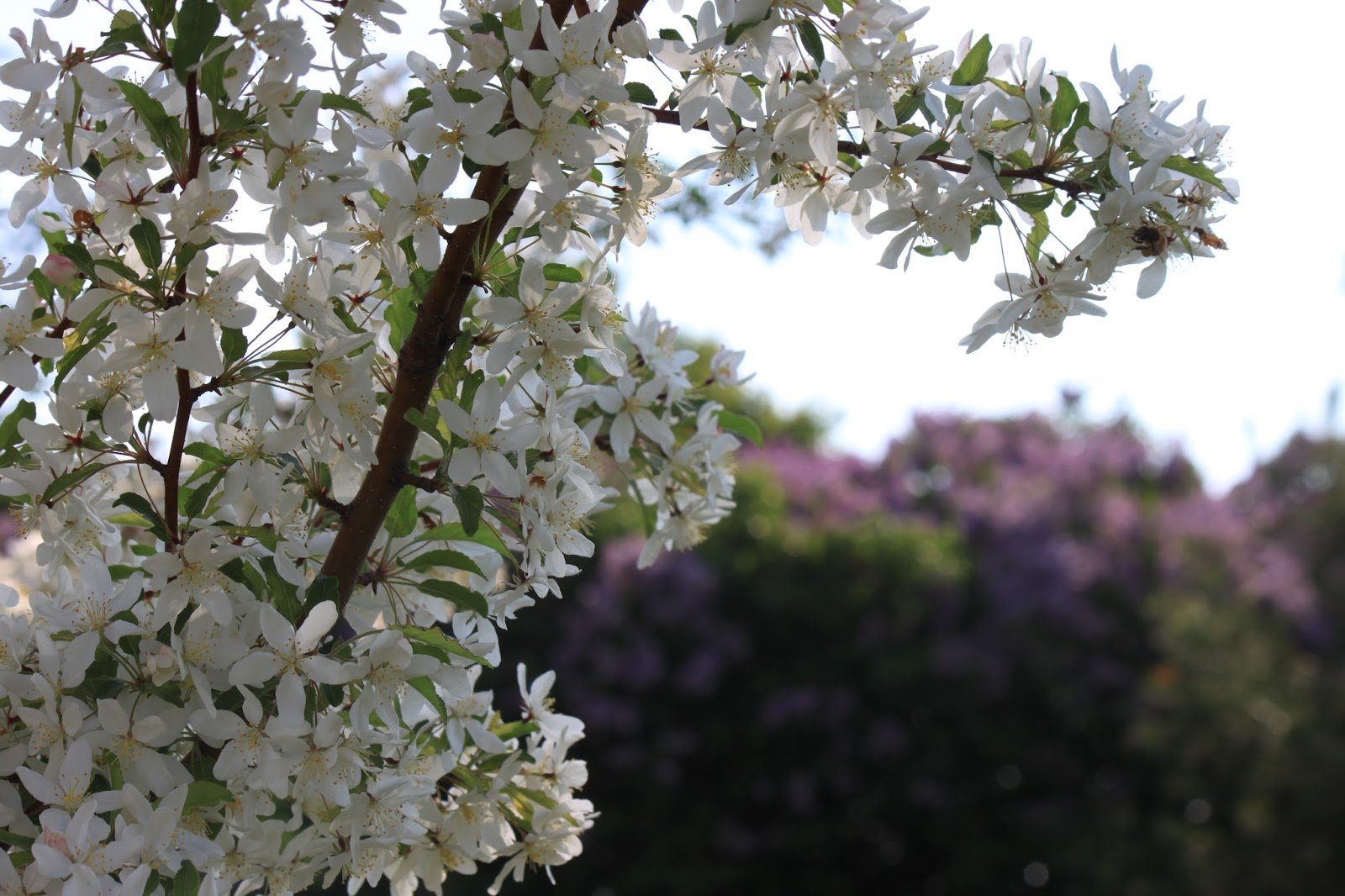
Helping Children Welcome Spring


Discover Changes in Nature - Get Ready!
 Adults can help their children discover the changing seasons by sharing the excitement of watching for signs of spring. You will need vases, water, sprigs of bushes and trees, books about spring and seasons.
   Read some books together about spring.  Talk about the seasons. Then on a nice day take a walk in your yard or neighborhood.  Look for signs of spring. On rainy days notice how water runs down hill, forms puddles of water when it is backed up by sticks, or soaks into sand.  Push away mulch in the flower garden and look for any bulbs sending up shoots.  Are there any very early flowers blooming?  Can you find any green grass?  Are farmers or gardeners preparing to plant?
  Cut some branches off a few bushes like willows or dogwood and bring them inside where it is warmer. If you cut some forsythia branches, they should produce yellow 
Children Learn By Observing Nature
flowers. Put the branches in a vase of water.  Notice how the branches have little closed buds. If you have time, take a photo or draw and color a picture that shows the branches on the first day.  Over the next week or two, watch what is happening to the branches and keep the vase filled with fresh water. Where is the water going? Talk about the buds getting bigger and becoming leaves. You could take another photo or draw a final picture to show what has happened.  Later, on a warm day, check around the yard to see if the buds are growing on the trees or if any new leaves are appearing.  Check around the garden to see if spring flowers are blooming. Take along a magnifying glass for a closer look.
Flower Beds
What's Happening in the Flower Beds??
Check what is happening in the flower beds.  Are the bulbs growing?  Are there some flower buds beginning to show?  Watch for birds building nests or finding worms for their new babies.  Can you find any bugs flying or crawling around? What is the weather like in spring? What happened to the snow? When can you plant vegetables or flowers in the garden?
   Provide children with a small rake to help carefully remove old leaves.  They can pick up sticks in the lawn and count them during spring clean up. Winter leaves paper and other garbage behind. Spring is a good time to fill a bag with litter during neighborhood walks. Write down the different kinds of garbage you find. Can some of it be recycled?
How Will This Help My Child?
Children will be learning to observe nature.  They will be developing new vocabulary words about seasons and parts of a plant, as well as first-hand knowledge about the changing seasons. For more see grandparentsteachtoo.blogspot.com; wnmufm.org/Learning Through the Season; Facebook, and Pinterest.
photos: Fran Darling, fdarling fotos 


Thursday, February 8, 2018

Helping Children be Happy Artists

Similarities And Symmetry Help Artists
Objects in nature have two similar sides when a line is drawn down the middle so the sides cover each other when folded in half. That is one kind of symmetry.  It is sometimes difficult and frustrating for children to draw those two sides free hand to their satisfaction. One side is fatter or skinnier than the other and after a lot of erasing they are left with a paper whole and tears.
  Adults can help by teaching children a few tricks with one of the most joyful symmetrical shapes -- the heart. Fold a piece of paper exactly in half and crease it. Draw half a heart on the creased side of a paper so when they cut along the lines and open up the fold they will have a perfectly symmetrical heart. Children can use rounded nose scissors for safety. They can practice making fat, skinny, and little hearts to glue on cards, a string mobile, or trace onto a picture.
More symmetry
 To make shamrocks you can follow the above procedure by drawing half a shamrock on a creased paper. However, there is another way. If you look at a shamrock you will notice it is really three identical hearts strategically placed on a chunky rectangle. Again show children how to make three hearts with the symmetry – fold method. Then cut out one chunky rectangle and glue on the hearts. 
Folding Helps Hand-Eye Coordination
   Butterflies, other animals, space ships, crosses, and humans are symmetrical when observed from a certain angle. People can be drawn this symmetrical fold way by drawing half a person on a creased paper, cutting it out, and tracing the person on a picture. Snowflakes, however, are six sided and cannot be made from a simple folded square or rectangle.
  The folding technique may help until their eye- hand coordination matures and objects turn out closer to the way they imagine—symmetrical. You have helped children get over a little developmental drawing bump..
Emberley Rescues
  Another suggestion, for a basic generic symmetrical human: draw an oval face, a little square neck, and a rectangle or trapezoid body. Draw four long rectangles for arms and
legs, a left shoe oval slightly turned left and right shoe as a smaller oval shoe front. The hands have thumbs slightly pointed away from the fingers next to the legs while fingers tightly fit together.
Try a Step-By-Step Approach
Ed Emberley has more step by step drawing ideas in his books. He shows how to make people look like they are moving, too. Children can also experiment making the limbs bend by studying their action figures.
   If your children are not frustrated or they don’t want to improve at this time let them be. Art should be joyful. For more ideas see grandparentsteachtoo.blogspot.com, wnmufm.org/ Learning Through the Seasons, Pinterest, and Facebook.
PHotos: Fran Darling, fdarling fotos

Friday, July 15, 2016

Finding Symmetry in Nature

Symmetry Is All Around Us
Symmetry is all around us in summertime. Children are fascinated with insects, flowers and other natural objects that are symmetrical.  This is an opportunity to talk about some math concepts and make beautiful symmetrical objects in nature.
  There are two main types of symmetry: rotational and reflection. When children point the top or bottom of pine cones at their nose they can see that both sides of the swirl or rotation are the same.  If children look at a butterfly and cover one half going north and south, they will see both sides are the same (reflection). If they place a little mirror down the center (going north and south) they will see the reflection is exactly like the other half.
Collect Nature
  When families go on car trips or hikes they can collect symmetrical clam shells, leaves, flowers, rocks, insects, or take close up pictures of them.
Two Main Types of Symmetry
Point out to children that their bodies and shadows are symmetrical, too. Is their house symmetrical? Look at family pets. When they are observed at certain angles are they symmetrical? 
 This easy art project is another way to play with symmetry. Gather some drinking straws to use as eye droppers for colors of poster paint, markers, sheets of paper, small stones, or art jewels.
  Help children fold a paper in half either the long way or short way. Open the paper and drop several colors of paint from the straw “eye droppers” onto one half of the paper next to the fold line. Children can now fold the paper over the paint. Rub gently over the paper to blend the colors. Open the paper and talk about the “blobby” shape that has appeared. Point out that what is on one side of the fold is also on the other side of the fold. Look for the symmetry.
Symmetry Search
  While the paint is drying, search for symmetry in leaves, flowers, pine cones, insects, and other objects in your own back yard. Children often enjoy taking 
 Close-Ups of Insects on Flowers
close up pictures of colorful insects on bright flowers that are also symmetrical. Use a magnifying glass and study some insects or spiders you find. Talk about what makes them spiders and insects the same and different.
  Once the paint is dry children can use markers to add antennae, wings, eyes and legs. To make the new insect even more beautiful children may want glue on craft jewels. They can name the new insect and put it on display.
  Some books about symmetry include: “What is Symmetry in Nature?” by Bobbie Kalman and “Is it Symmetrical?” by Nancy Allen. 
Photos: Fran Darling - fdarling fotos
  For more science and math STEM adventures go to -  grandparentsteachtoo.blogspot.com and wnmufm.org/Learning Through the Seasons live Tuesdays at 4:30pm and Saturdays at 8:30 am and pod casts archived on the site.

Tuesday, August 4, 2015

Raising Wild Children

How can you recognize a wild child? Is he sitting on the couch playing computer games or bending over a parent’s smart phone? No. 
What Do You Smell?
Wild children are outside, exercising, playing, and discovering the wonders of nature.
  Discouraging research suggests that the average North American child spends about seven hours a day watching screens while only seven minutes playing outside!  In his new book, “How To Raise a Wild Child”, Scott Sampson, chief curator at the Denver Museum of Nature and Science, suggests that the present-day disconnect from nature, which is becoming so apparent, points to “one of the greatest and most overlooked crises or our time”.
   How can we counteract this disturbing trend towards virtual reality and pretend people who live in a cartoon world?  With permission from Dr. Sampson and Claudia Carbone, author of a nature article published in “Colorado Parent” magazine, the following are ways to foster “wild children”, kids who share deep connections with nature and real people.
  Sampson writes, “Nothing will spark a child’s interest in nature more than his or her parent’s own passion for the natural world.”  Here’s how to do it.
Notice Nature
 

What Do You Hear?
  Nature is all around us.  Find a place where you and your children can sit for a few minutes day after day and season after season to open your senses and deepen your nature connection.
This is an activity easily done by kids of all ages.  Be immersed in the environment. What do you see? What is changing?  What do you hear?
Engage Children
  Connect and engage with nature through walks, exploring various ecosystems, puddles, mud, streams, gardens, and climbing around or making collections of natural materials.  Talk together as you explore.

Where Can You Walk?
Wonder with Children
   Ignite the senses and get kids wondering about all sorts of things.  Tell stories and share your experiences.  Decide to research some things together that you wonder about.  Find books about nature at the children’s library or bookstore and read them together.   You will be building background knowledge and vocabulary at the same time.  Dr. Sampson writes:  “Technology has created a gaping chasm between children and nature. 

What Do You Wonder?
Immersion in wilderness not only awakens the senses and provokes deep thoughts and feelings, it also often leads to transcendent experiences that deepen the bond with nature.”
   Parents and other caregivers can help close the gap between nature and technology by mentoring our children. There are many easy and inexpensive experiences in nature that can be fun for kids and adults alike. Start today to raise a wild child!  “How To Raise a Wild Child” by Dr. Scott Sampson, is published by Houghton Mifflin Harcourt and available soon at bookstores.

Photos, Fran Darling, fdarling fotos

More Ideas and Activities....See the authors’ book “Learning Through the Seasons” at area bookstores and grandparentsteachtoo.org. For more help to prepare young children for success in school see the authors’ web site: www.grandparentsteachtoo.org. Also check our audio Podcasts WNMU Radio 90; Youtube video activities; and join us on Pinterest

Monday, March 11, 2013

Winter Outdoor Activities: Make a Birdfeeder


 Adults can help young children develop a love of nature and a caring relationship with wildlife by making a simple peanut butter bird feeder. You will support wildlife and help children develop important language and motor skills.

Materials you will need:
 Wax paper, pine cones or large chunk of dry bread, peanut butter, birdseed, string or thin wire, and table knife

What to do?
   Talk with your child about how birds need to find food in the winter months.  Plan to make a bird feeder to help attract birds to your yard. You might draw the steps and check them off as they are completed.
  Find some pinecones or make pieces of stale bread or toast and lay them out on a piece of wax paper. 
  Tie a string or wire about 8 inches long around the cone or bread, leaving string at the top to attach the birdfeeder to a tree later.  Spread a generous amount of soft peanut butter all around the cone.  Next, sprinkle birdseed on the peanut butter. You may want to begin to freeze the cone or bread. It’s not as sticky to handle. Decide where to hang the birdfeeder and secure it so children can see it from an inside window.  Watch the birds enjoying their treat. When the feeder is eaten, just make another.

How will this help my Child?
  Children benefit from planning an activity and following the steps in the correct order to complete a project.  By using words like first, second, next, finally, or last you will be helping to develop a sense of order or sequence.  By talking together, answering questions, and observing wildlife, you are stimulating natural curiosity.  Spreading, rolling, patting, pouring, all help develop fine motor control and skill.

What other Activities Could We Do?
  Observe and count the different kinds of birds in your backyard. Keep a calendar with the number and kinds of birds and other animals at your feeder. When do birds visit? Is there a time when squirrels and other animals are not there?  Where are they?  Where do birds and squirrels go to keep warm in the winter? What animal tracks do you see around the feeder?
   Children sometimes like to draw a picture after doing a fun activity. You could print a sentence at the bottom of the picture for your young child to read and show.  Children can describe the steps you took to complete the feeder and help to explain the sequence to others.  Find some non-fiction or guidebooks at the library that show different kinds of birds or read fiction books like “Sadie and the Snowman”.
For more activities to prepare young children for success in school and reduce the stress of child care, see the authors’ book “Learning Through the Seasons” at book stores and Grandparents Teach, Too web site and listen to the WNMU Radio 90 Podcast for even more ideas. 
Illustration: Mark Nowicki