Showing posts with label art. Show all posts

Sunday, February 2, 2020

Art and a Child’s Brain

Making Art: There's a Lot Happening!
“Creativity in and of itself is important for remaining healthy, remaining connected to yourself and connected to the world,” according to Dr. Christine Strang neuroscientist at University of Alabama Birmingham. It turns out there’s a lot happening in our minds and bodies when we make art—any kind of art. Art enhances brain function and well-being whether a person suffers from PTSD or a young child is developing a healthy brain, fine motor skills, creativity, emotional balance, a sense of accomplishment, or relieving stress. What does that mean for families? Provide some art basic art supplies in the home and sit down and do art with the kids in happy times, sad, or angry times.
Free Form
  Art supplies don’t have to be extensive or expensive.
 Young children can have a box or cabinet of computer paper, colored construction crayons, markers, paints, Playdough, child scissors tape, glue, and a place to display their art. Some children like postcard size paper rather that big sheets. Some like a piece of paper the size of a table to keep adding to the scene and the story.
Art Supplies Are Everywhere!
A few family members can sit down and join the little ones with soft music on, someone reading a book out loud, or the pleasure of silence and room for conversation from time to time.
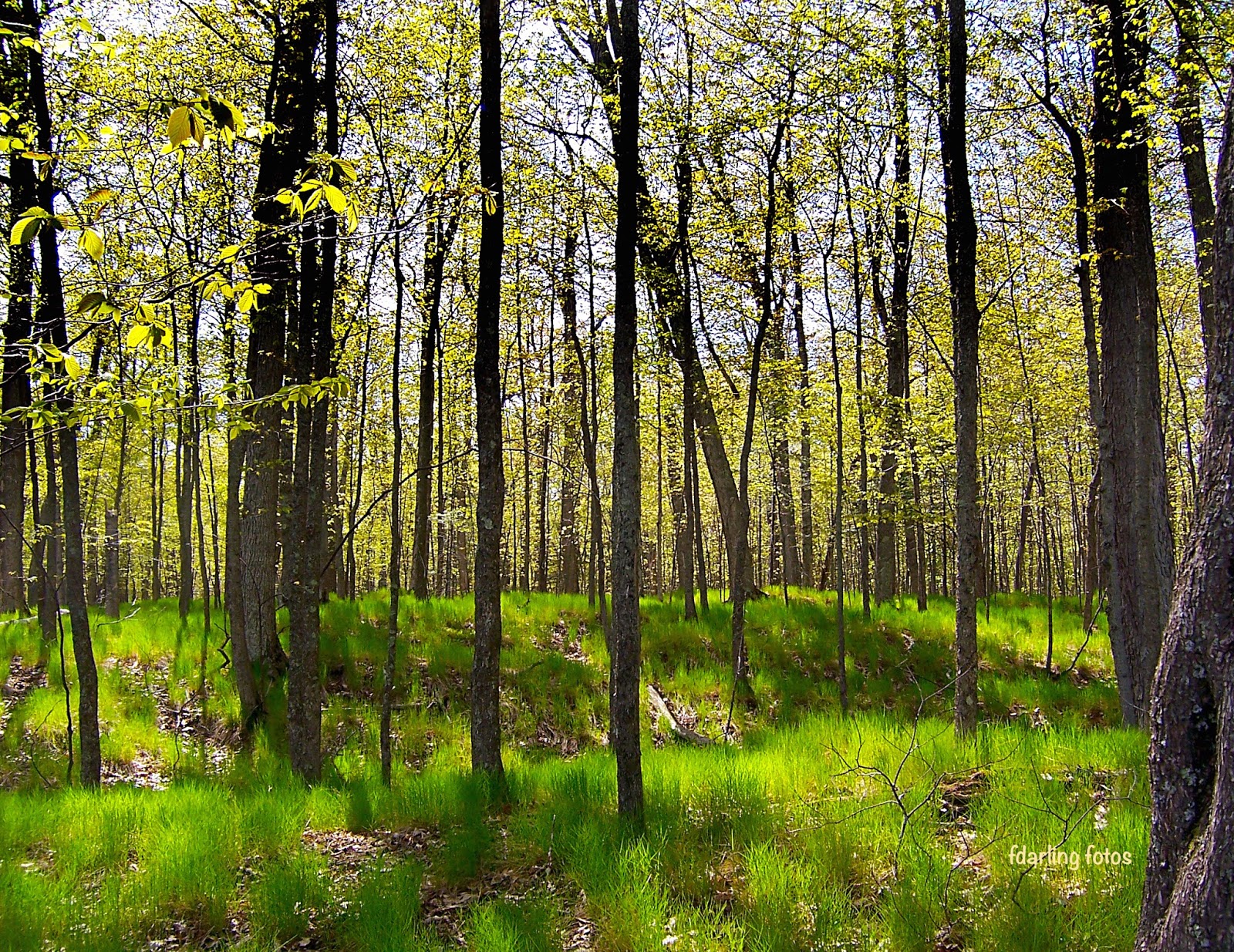
 In free form art the artists are totally in charge, making what they want. If anyone is stuck, someone can suggest a topic to get the brain going: creating something happy or a recent family drama. It can be a walk in the woods, beach, hills, along the lake, in the snow.  What is your favorite, most beautiful, most quiet, safest place to be? Do you want to paint sunshine, a forest, some animals, spaghetti, a cherry pie, peanut butter sandwich, sledding, dolphins jumping out of water, or grandpa? 
Mandalas
  Some children enjoy premade designs. Mandalas are beautiful art circles that are contained within a square and are found in most cultures. In their most basic form, mandalas are circles arranged into sections that are all organized around a single, central point. Mandala coloring books are found in most stores in the book section and are part of soothing art therapy for all ages. 

Transform Ordinary Minds into Enlightened Ones!
The purpose is to help transform ordinary minds into enlightened ones and to assist with healing. Families find them relaxing and lots of fun. Check “How to Draw a Mandala” at art-is-fun.com.
   There are many rewards of art in the family.  It activates the hypothalamus and orbitofrontal cortex which are parts of brain associated with appetite regulation, calculating risk, impulse control, and detection of social rules.  For more see grandparentsteachtoo.blogspot.com: wnmufm.org/Learning Through the Seasons live and pod casts; Facebook, Pinterest, and You Tube since 2009.
Photos: Fran Darling, fdarling fotos

Tuesday, April 23, 2019

Creating Paper Glass Chihuly Art


Chihuly Glass Sculpture in Nature?
Whenever it is too a cold too wet to play outside or a children are sick grandparents can take out a few art supplies and try a new easy craft. It’s always good to be prepared. This craft is based on the famous contemporary glass lamps and sculptures of Dale Chihuly found in beautiful buildings around the world. You will need  some coffee filters, non- permanent markers, spray starch, a yogurt container or plastic cup about the size of the middle of a coffee filter, and battery operated tea lights. 
  If you and the children search Google images “Dale Chihuly glass” children will  get inspiration for their own paper glass Macchia which means spotted in Italian. Thespotted glass they will make can be used for dishes or a candle holder with a little nonflammable light in the middle.
Paper Glass
  To make the paper glass, cut around a coffee filter edge to make it scalloped or slightly uneven in no particular pattern.
Making Paper Glass
 Flatten out the filter and make a series rows of scribbles like short tightly closed tents with different colors.  Children should make each color about half an inch wide before starting another color around the filter.  They can also make different colored dots. Looking at the images of the Chilhuly glass will help get across the idea that one color is going to bleed into the other. Blue next to yellow will bleed into green. Red next 
Delicate and Translucent
to blue will bleed into purple.  If children want to stick to primary colors, leave a large space between them.  Children can make each filter different or make a set that look the same.
  Once children have made jagged lines, spots, and blobs, drape the coffee filter over an upside down plastic cup or individual yogurt container. Place some newspapers under the containers. Apply spray starch to the filter until the marker colors blend and the coffee filter is completely wet. Allow the filters to dry and do not touch them.
Once dry they will be translucent and mimic the look of Chihuly glass.  They will be as delicate as glass but will not break.  If they are gifts, place them in a box with tissue paper tucked around them. They will keep their shape if not handled too roughly. There is also a short film on Vimeo at bit.ly/chihulyvideo.
Flower Bouquet  
Coffee filters come in handy for a variety of children’s art projects.  Sprayed with starch or not they can be painted with water colors and attached with pipe cleaners for a floral bouquet. They can be flattened and placed in a window to add a stained glass look to a child’s room.
Photos: Fran Darling, fdarling fotos 

Thursday, February 8, 2018

Helping Children be Happy Artists

Similarities And Symmetry Help Artists
Objects in nature have two similar sides when a line is drawn down the middle so the sides cover each other when folded in half. That is one kind of symmetry.  It is sometimes difficult and frustrating for children to draw those two sides free hand to their satisfaction. One side is fatter or skinnier than the other and after a lot of erasing they are left with a paper whole and tears.
  Adults can help by teaching children a few tricks with one of the most joyful symmetrical shapes -- the heart. Fold a piece of paper exactly in half and crease it. Draw half a heart on the creased side of a paper so when they cut along the lines and open up the fold they will have a perfectly symmetrical heart. Children can use rounded nose scissors for safety. They can practice making fat, skinny, and little hearts to glue on cards, a string mobile, or trace onto a picture.
More symmetry
 To make shamrocks you can follow the above procedure by drawing half a shamrock on a creased paper. However, there is another way. If you look at a shamrock you will notice it is really three identical hearts strategically placed on a chunky rectangle. Again show children how to make three hearts with the symmetry – fold method. Then cut out one chunky rectangle and glue on the hearts. 
Folding Helps Hand-Eye Coordination
   Butterflies, other animals, space ships, crosses, and humans are symmetrical when observed from a certain angle. People can be drawn this symmetrical fold way by drawing half a person on a creased paper, cutting it out, and tracing the person on a picture. Snowflakes, however, are six sided and cannot be made from a simple folded square or rectangle.
  The folding technique may help until their eye- hand coordination matures and objects turn out closer to the way they imagine—symmetrical. You have helped children get over a little developmental drawing bump..
Emberley Rescues
  Another suggestion, for a basic generic symmetrical human: draw an oval face, a little square neck, and a rectangle or trapezoid body. Draw four long rectangles for arms and
legs, a left shoe oval slightly turned left and right shoe as a smaller oval shoe front. The hands have thumbs slightly pointed away from the fingers next to the legs while fingers tightly fit together.
Try a Step-By-Step Approach
Ed Emberley has more step by step drawing ideas in his books. He shows how to make people look like they are moving, too. Children can also experiment making the limbs bend by studying their action figures.
   If your children are not frustrated or they don’t want to improve at this time let them be. Art should be joyful. For more ideas see grandparentsteachtoo.blogspot.com, wnmufm.org/ Learning Through the Seasons, Pinterest, and Facebook.
PHotos: Fran Darling, fdarling fotos

Sunday, April 30, 2017

Inspiring Children with Art Masterpieces

Explore A World of Diversity Through Art
People have always used art as a way to record an event, express themselves and their emotions. Children can learn a great deal from art since there is so much to observe and talk about.  By sharing art, families can open up a world of richness and diversity for children to explore.  You can search for art pieces either from a book, library (some loan pieces out), a visit to an art gallery, or online.
  While sitting next to your children, look at art together and discuss things that you see in the pictures. Talk about the clothing, colors, facial expressions, animals, light, shadows, or weather in the picture. Have a conversation about how the picture makes you both feel. Is it a happy picture? Does it look noisy or quiet? Does it look like a photograph from a camera? What might you change in the picture?
 Imagining
 Children can pretend to be in the painting running in the field 
Smell the Fields and Flowers
of flowers, smelling a sunflower, being knight riding off on a horse or an animal stalking prey. Children can make up a story surrounding a scene or have a treasure hunt looking for objects in paintings.
   Matching picture games are quiet activities. After downloading from a computer print two copies and cut one up. Your child can match and glue cutout details to the picture such as a child from the painting, an animal, or a piece of scenery.
Art Inspires
  Since artists are inspired by others, your children might enjoy copying a painting printed from a computer by using tracing paper over it and coloring it in. 
Trace Art That Inspires
They might like to draw their version of Van Gogh’s sunflowers, Turner’s storms, or Monet’s flower gardens.
 You may want to look up the Norman Rockwell Museum for” Saturday Evening Post “magazine covers that have inspired children to draw their own scenes that tell a story. Your children might enjoy painting flowers, sunsets, or scenery on a large rock to decorate the garden.
  Older children may like to copy geometric designs, patterns and bright colors of paintings by Mondrian. These help children use a ruler and protractor.
   Children can make their own at-home art 
Make a Home Art Gallery
gallery. Frame some of your children’s artwork. Display them on a wall or refrigerator. A string with clothespins or paper clips holding artwork adds color to rooms. When that space is full, move some to a special folder for safekeeping. Pictures can be scanned and saved in computer folders. The next time your family is on a picnic or walk in the woods bring along some art supplies and draw the scenery. Children around the world often do this on family outings.
photos: Fran Darling, fdarling fotos

For more ideas see grandparentsteachtoo.blogspot.com and wnmufm.org/ Learning Through the Seasons live and pod casts.

Tuesday, May 10, 2016

S.T.E.M. Perfect for Families

STEM Opens Conversation Channels
S.T.E.M.  opens up many new opportunities for conversation and learning  during family time like taking walks. The acronym stands for having fun with science, technology, engineering, and math.  Most states have now added “A” for art making the acronym S.T.E.A.M. It’s a way of organizing learning and families can participate.
A Way of Thinking
  How does S.T.E.M. work in the family?  Whenever a family is doing an activity, adults can add a little learning. For example, if grandpa is taking a walk with young children he can stop to watch a few ants working around their anthill. He might even pack a magnifying glass, a
How Does STEM Work?
 real handy tool.  Maybe they’ll pick up a stick to watch an ant crawl. Gramps can add a few interesting science facts he knows about ants, like they bite and may sting.  They crawl down many feet below the frost line to survive the winter. What happens if we leave a little honey, cheese, or a dead fly by the ant hole?  What is the prediction?
  When they get home they might look up information about ants and images on Google or You Tube educational movies.  They might take a picture with their camera. This picture can be inspiration for some sketches, models of ants, or a library visit.  
How Does STEM Work?
  To get the “E” for engineering, grandpa might talk about now the ants make their home. What happens when their house on the sidewalk gets washed out?  How long will it take to rebuild? How is their home like ours—ant farm anyone?
  Let’s count how many ants we see on the way to the park?  Are they all the same color and size?  Is there a pattern to the ant holes on the sidewalk?  There is your math.
  Counting, finding likenesses and differences, looking for patterns, asking questions, figuring out answers, putting in groups, and classifying them are activities kids love to do. Adults can sneak them in anytime anyplace.
Seaborg Center
  Families can talk about the weather, gravity, animals, plants, tracks, mud, gardens, water, 
Sign up for Summer STEM!
food, signs, 
camping, or playing sports, all with S.T.E.M. or S.T.E.A.M. in mind. It’s a way of thinking that just takes a little practice.
  According to the National Science 
Foundation “Over 50% of the fastest growing jobs in the U.S. are math, science, engineering, or technology related” and with families helping, grandkids can get those jobs.
  
All Free Home Materials!
Northern Michigan University offers many exciting summer S.T.E.M. classes for young children at the Seaborg Center that are S.T.E.M. related.
  Many libraries, nature centers, Y’s, and summer camps use the S.T.E.M. model for organizing their programs.  There are also many on-line ideas to easily work S.T.E.M. into your family’s summer life.  
It’s all free with materials in homes, parks, and backyards. 
photos: Fran Darling, fdarling fotos

More Vocabulary Ideas and Activities....See the authors’ book “Learning Through the Seasons” at area bookstores and grandparentsteachtoo.org. For more help to prepare young children for success in school see the authors’
website: Also check our audio Podcasts WNMU Radio, 90; Youtube

Tuesday, August 12, 2014

Creating A Home Art Corner


fdarling fotos
 What would happen if you provided an art corner for your children and supplied them with objects found around your home and in the great outdoors?  What if you read to them every day and took them to the library and provided a literacy-rich environment?  Listen to the words of Caldecott Award winning children’s illustrator, Lois Ehlert, tell us about her childhood experience as described in “The Scraps Book: Notes From a Colorful Life.”
  “When I was little, I read all the books on the library shelf, and I thought maybe someday I could make a book. I was lucky. I grew up with parents who made things with their hands.  Mom loved to sew.  She had colorful fabric scraps, buttons, lace, ribbons and many scissors that she shared with me.  Dad had a basement workshop.  He gave me wood scraps and taught me how to paint, saw and pound nails.  So I had wonderful art supplies and tools close at hand.  In a small corner of my house, Dad set up a folding table for me.  It was my spot to work and dream.
 Ehlert goes on to tell how she created a love of art but not for books right away.  She knew that it takes time to develop dreams. 
Easy Ideas
fdarling fotos
She finds her book ideas and inspiration from the world around her.  For example, shopping for fruits and vegetables gave her the idea for her book, “Eat  She planted a spring garden for her mother using red, orange, yellow, blue and purple flowers. The result was the book “Planting a Rainbow.”  Children could pick and dry flowers to make a rainbow garden picture for you.
ing the Alphabet.” Your children could eat their way through the alphabet for fun.
  “The Scraps Book.” provides several other sources of inspiration including her ice fishing decoy. Your children could make little bird, or other animal decoys with nature scraps or wood glued together and painted.
  Ehlert tells about her art technique called collage.    She describes it as very messy but “when ideas are flowing, I keep working.”  She uses a variety of tools to create texture, including spatter painting with a toothbrush and rubbing a crayon over a grater.  She adds objects close at hand such as toys, food, pinecones, seashells or bottle caps.  The many colorful photographs in the book show the results and give children ideas for their own projects.
Creative Focus
  Why is this important to children?  Creativity focuses on process of forming original ideas through exploration and discovery.  Creative children learn to think and solve problems for themselves.  They learn not to fear mistakes and feel free to invent, create and find new ways to do things – all valuable and much-needed skills in today’s world. 
Photos: Fran Darling fdarling fotos
More Ideas and Activities...
See the authors’ book “Learning Through the Seasons” at area bookstores and grandparentsteachtoo.org. For more help to prepare young children for success in school see the authors’ web site: www.grandparentsteachtoo.org.
Also check our audio Podcasts WNMU Radio 90; Youtube video activities; and join us on Pinterest.