Tuesday, September 26, 2017

Sorting Helps Science and Math Skills

Walks With Young Children Are FUN!!
Walks with young children are especially fun in fall when the leaves turn brilliant colors and many flowers have interesting seed heads. They can observe birds flying south in giant V’s and other animals frantically burying food for the winter. It’s a great time for children to collect objects, too.
 You can prepare by gathering some small bags, paper plates, glue, newspaper, a marker, and magnifying glass.
Collecting Fun 
   Learning goes better on a full stomach. Right?  You can pack a picnic snack and explain you are taking a walk to look for signs of fall and collect colorful leaves, seeds, and pebbles which stay the same in any season but are fun to collect. Take along an extra bag for paper garbage to clean up the area, too.
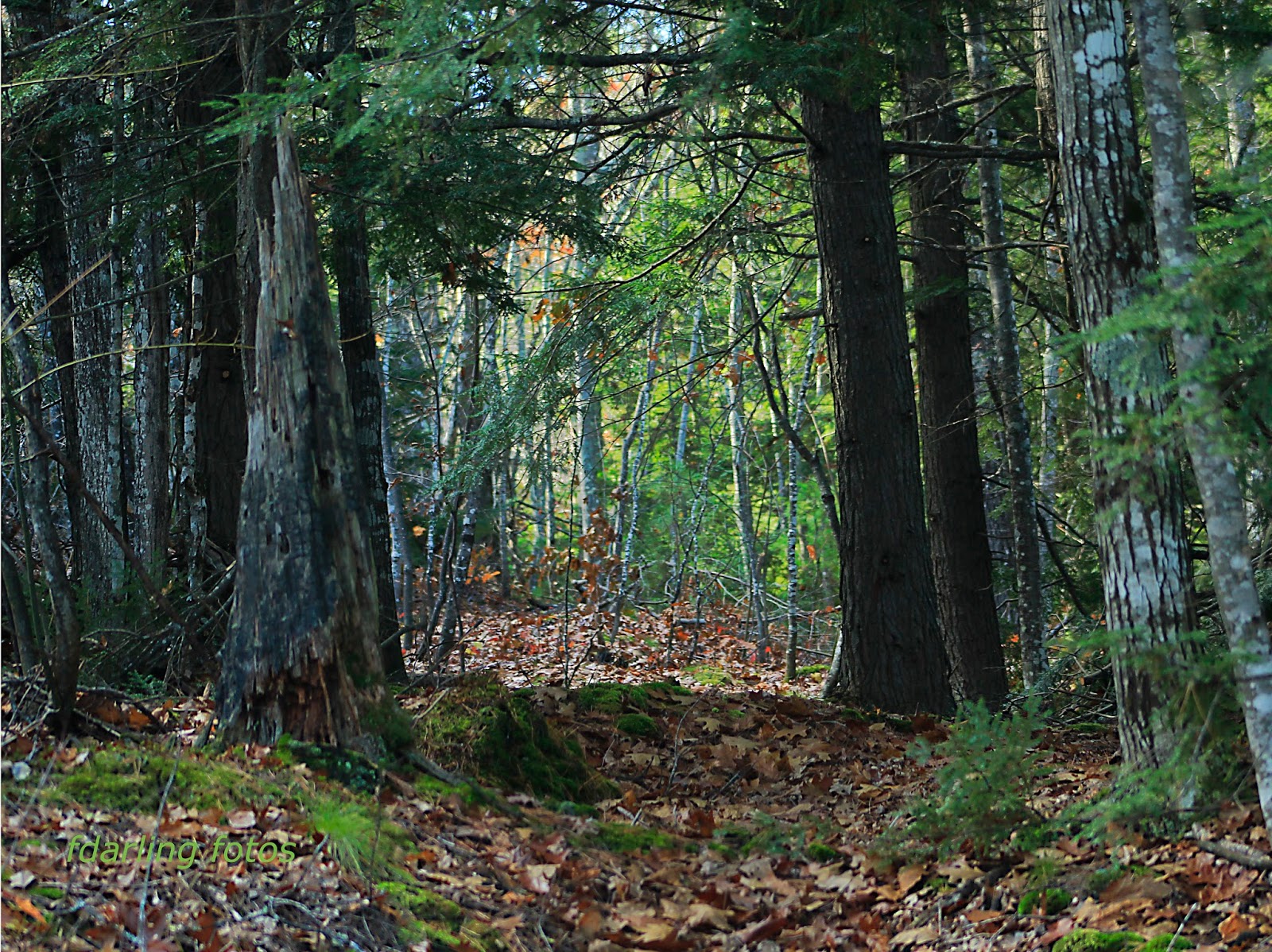
  Fields, bike paths, shorelines, cemeteries, and college campuses have a variety of trees and beautiful surroundings. Encourage children to collect and count many different types, sizes, colors, shapes, and textures. You can include a library book of tree identification to help answer questions about why leaves change colors and fall.
Collect and Count
Sorting Skill
  After collecting and snacking return home to sort out materials on newspapers based on characteristics. Print a title on each paper plate like leaves, seeds, or pebbles.
   Next label more plates with characteristics (attributes). For leaves, you may use five plates labeled red, orange, green, brown, and mixed colors.  Plates for seeds may be acorn, maple, and flower and weed seeds, large, and small. Pebble labels may be large, small, shiny, dull, smooth, rough, sharp, soft (sandstone) hard black, brown, white, speckled.
   Casually help your children decide where the objects belong. Before you take a break, spread leaves in paper toweling and insert them in a large book. (Back to back cookie sheets will also work.) Then place some heavy weights on top to flatten the leaves as they dry.
 When you’re ready for another 
Discuss What You Collect - Similar & Different??

project, take out paper plates, marker, and glue. Children can glue the sorted objects to make designs, a number, category, or their name. Children like to glue leaves, seeds and rocks on plates as a collage, take a photo, and send it to extended family or show during the next FaceTime.

 Discuss different attributes of objects as children glue them on the plates. Young children will develop small hand muscles and learn to use small dabs of glue.  It is very tempting to take a glue bottle and squeeze it neatly for children or place an object just so.  Instead give tips on how to hold the bottle and leave the rock where it is. The end product is not really important. It’s the process. For more family fun see grandparentsteachtoo.blogspot.com and wnmufm.org/Learning Through the Seasons podcasts and live.
Photos: Fran Darling, fdarling fotos

Thursday, September 7, 2017

Helping Kids Learn to Read Their Name

Help Younger Children Learn To Spell Their Names
As big brothers and sisters return from school and talk about what they are learning, autumn is a perfect time for younger children to learn to spell their name and share what they are learning, too.  There are some fun activities to help remember the letters of their name and the sequence of those letters.
  You will need some heavy stock paper cut in 4”by 16” strips, white glue, marker, elbow macaroni or penne pasta, sandpaper, felt, child’s scissors, poster paint, colored glue, and confetti. Texture Helps Learning
  Print your children’s names with marker on one of the tag board strips. Precut heavy stock paper can be purchased at most craft or school supply stores and is great to have on hand for projects.  The letters need to be 
Texture Helps Learning to Print Names
large enough and spaced far enough apart so children can glue pieces of macaroni to the strip to form the letters over your printing.  Make sure the only capital letter is at the beginning of the name. It’s a good idea to start with only the first name.     
   Carefully, go over each letter, explaining to children that these letters in this order spell their name. Show them how to glue the macaroni onto each letter, saying the name of the letter as they are gluing. When the glue has dried, have them trace each letter with their finger and spell as they trace. They can paint the name with their favorite color when it is very dry.
  The letters of their name can also be cut from sandpaper or felt and glued to another tag board strip in the correct order. Cut the letters yourself, but your children can glue them onto the tag board.
   Using colored glue to outline the letters is fun, too. Glue can be tinted with food coloring. Children can add sand, glitter, or confetti outdoors to make a colorful art project from the name.
  Touching clues can be very helpful when children are learning letters and words.  Tracing over the noodles, sandpaper, or felt with a finger can help your children remember how to spell and print their names.
Great ABC Books

  Families may wish to check out some alphabet books at the library to practice remembering letters.  Some favorites are 
Many ABC Books Help 
“Chicka Chicka Boom Boom” by Bill Martin, Jr., “Thomas’ABC Book” by Rev. W. Awdry and “Dr. Seuss’ ABC’s.”  Another book that will add some motor activities is “Movement ABC’s for Little Ones” by Rae Pica.  This book gives ideas on how to make letters with your body.  Make letter cards together and play games like “Memory” and “Go Fish” to review letters. Also check out the many puzzles and games that feature the ABC’s. For more ideas see grandparentsteachtoo.blogspot.com and wnmufm.org/ Learning through the Seasons.

Sunday, August 27, 2017

Taking a Second Look in Kids’ Lunch Boxes

Whole Apple Slices - NOT Processed Apple Sauce
Let’s see, pack the school lunch box, check: peanut butter and jelly sandwich on whole wheat, check, one cup apple sauce, check, fruit punch, healthy lunch, check. 0pps, not so fast. Nutritionists and physicians would like families to take a closer look.
  That lunch we just sent off with our little darlings may have a whopping 75 grams of sugar. The American Heart Association suggests children have about 17 grams of sugar a day.  One rounded teaspoon of sugar or a sugar cube has about 5 grams of sugar. If we look at our lunch again, we just packed 15 sugar cubes in our children's noon meal and sent them merrily on their way. What??

  Dr. Jim Surrell colorectal surgeon whose special interest and expertise in nutrition and weight loss programs led him to write his book” SOS Diet Stop Only Sugar” helped provide information for this column.
Sugar Detectives
  With one of every three children over weight and on their way to type 2 diabetes, what can we feed children that they will eat and still be low in sugar?  Both Dr. Surrell and experts with the American Heart Association have excellent suggestions. First, start early not giving babies and toddlers food with sugar added. Read the labels. 
There are many names for sugar. If fructose, corn syrup, sweetener, dextrose, fructose, honey, or molasses, just to name a few are near the top of the ingredient 
Be A Sugar Detective
list look for alternative foods.
   The more processed the food, the more sugar content.  One packet of flavored oatmeal has 13 grams of sugar. One cup of regular oatmeal with unsweetened almond milk warmed in the microwave with a few berries 
or natural applesauce with no sugar added has much less sugar.  Older children can be trained to be sugar detectives by reading ingredient labels and adding up the sugar grams.
ABC Guide
  Dr. Surrell has a simple ABC guide in his SOS” book:” A- Avoid excess sugar!; B- Become a label reading detective!; C-Choose low sugar and high fiber!
  Let’s go back to that school  lunch. What can we do? Learn to substitute. Pack peanut butter with no added sugar as a dip for a sliced and cored medium apple (14 grams of sugar) tied with a rubber band around it.
Follow the ABC Guide
  Dr. Surrell’s other high protein, low sugar suggestions include: hardboiled egg, cottage cheese, Swiss, cheddar, Colby or string cheese, handful of dry roasted peanuts, cocoa or  plain roasted almonds, cashews, raspberries, blackberries, strawberries, whole grain crackers, red or green vegetables like crunchy snap pea pods, and water. For safety include an ice box to keep food cold. If teachers ask for snacks, some of these might be sent to school.

  For more healthy suggestions see Dr. Surrell’s “SOS” book, grandparentsteachtoo.blogspot.com,wnmufm.org /Learning Through the Seasons live and pod casts.
Photos: Fran Darling, fdarling fotos
Sketch: Mark Nowicki

Tuesday, August 8, 2017

Safe Solar Eclipse View


Solar Eclipse August 21st 

Summer isn’t over the school bells ring! There is still time to do a few summer things.
   String problems may take the rest of the summer to untangle, but remember summer is not over until it’s over. You will need two people, balls of yarn or thick string, and  chairs.  Tie string loosely around two chairs with loose knots. The one who is not doing the tying can watch or to make the untying more difficult, look away.  You can use two different colors, take turns tying up the chairs, and as a team untie the string. This activity can be used for preschool on up, and you can make up many variations. It is inspired by the book “Maniac Magee” by Jerry Spinelli, a good read for middle school students.
An eclipse of the sun will occur when the moon gets between the sun and the earth August 21.
 Looking at the sun for even a short time can damage the eyes or cause blindness, but
  NASA has a safe fun way to study the Great American Solar Eclipse with a homemade pin hole camera.  You will need two pieces of cardboard or white heavy stock, one 4”x 4” aluminum foil, a pin or paper clip end, tape, and scissors.
We Are the Only Planet To See Total Eclipses
  Cut 2”x2’ square hole in the middle of one sheet of paper. Tape the foil over the square. Poke a hole in the aluminum foil. Place the second piece of paper on the ground, preferably in the shade for a clearer image. Hold the foiled paper with the foil facing up. Stand with the sun behind you and view the projected image on the paper below. Do not look at the sun. Move around until you find the image. The farther away you hold your camera from the ground, the bigger the projected image but not as sharp.
  We are the only planet in our solar system where the moon and the sun have the same apparent sizes because of distance. Total solar eclipses rarely occur over the U.S, in some cases every 99 years. Check what will occur in your area.
Shadow Pictures

Make Some Shadow of Your Own
  While in the sun make unique pictures of friends. In the early morning or late afternoon, tape  large pieces of newspaper on the ground. Your children can stand so their shadows fall on the paper and they can trace shadows. Can they arrange themselves so the shadows exactly cover (eclipse) a friend’s shadow?  Try this again at noon. How different are the shadows and drawings at noon when the sun is in a different position in the sky?  If done at 11:30 the shadows will point north. For more fun and family education see grandparentsteachtoo.blogspot.com, wnmufm.org/Learning Through the Seasons, Pinterest, and Facebook.
Photos: Fran Darling, fdarling fotos